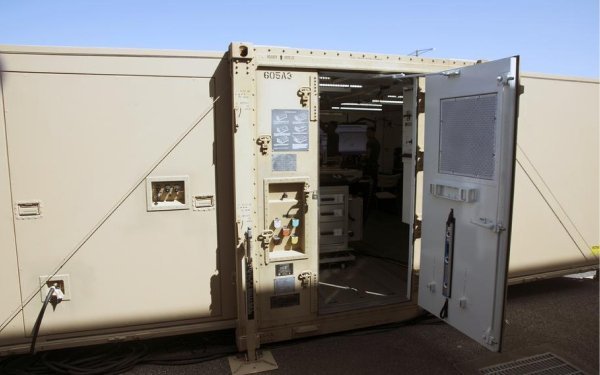
Just recently we saw how the USS Essex took to the oceans with their own metal printer for fabricating and repairing components while out to sea. This week, it’s the turn of the US Marines who have been testing their own Factory in a Box concept that will allow accurate metrology and advanced plastic and composite manufacturing out in the field. The so-called Expeditionary Fabrication Shop is a portable solution to enable manufacturing and repairs in hard to reach locales and areas without infrastructure. The project is being trialed at a Marine base in Okinawa by the III Marine Expeditionary Force. One of the mini-factory units at Camp Kinser. (Image credit: Stars and Stripes) “The intent is to supplement the supply chain and return whatever piece of equipment it is back into the fight as fast as possible,” said Gunnery Sgt. Quincy Reynolds, who is NCO in charge of the… read more

Alex

Korean 3D bioprinting specialist T&R Biofab has patented a way of creating human tissues that could one day be used to develop a heart disease treatment which doesn’t put patients through open surgery. Utilizing T&R Biofab’s process, scientists have already proven it possible to create 100-micrometer cardiac spheroids, capable of regenerating damaged tissues upon transplantation. While the technology remains at a pre-clinical stage, the firm’s patent approval in Japan could now be significant, in that the only developer of something similar in the country, has reportedly licensed it out for $600 million. Imaging showing cardiac fibrosis taking place in spheroid samples after 8 weeks. Image via T&R Biofab. Regenerative cardiac therapy According to CDC heart disease data, cardiac illnesses are the leading cause of death in men and women across most racial and ethnic groups in the US. As such, the development of robust cardiac therapies is a matter of… read more
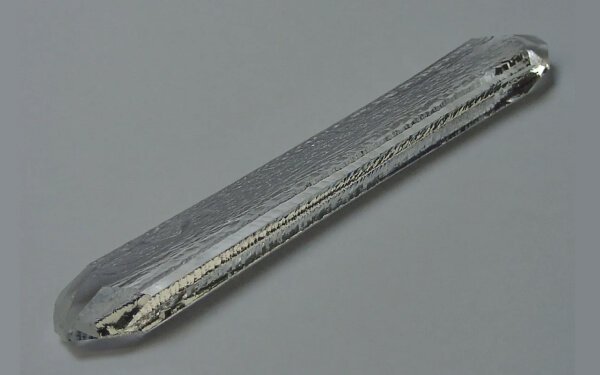
A team of researchers at the National Institute for Materials Science and Osaka University Graduate School of Engineering in Japan, has successfully demonstrated the fabrication of single crystal nickel with additive manufacturing, and they are hoping it finds applications in aerospace. Single crystal metals are highly prized for applications undergoing high stresses and strains and in high temperature environments such as inside a jet engine. They also crack less during manufacturing. Typically they are manufactured with casting. Traditional turbine blades used to be polycrystalline in nature, meaning that the alloy material consists of random crystals formed as the cast blade cools. The interfaces between these random grains are called the grain boundary, and these are a point of weakness in the microstructure of the material. A solution to this problem was found by carefully guiding the crystal seed growth through geometric features inside the mold to guide the solidifying blade… read more

Selecting the right material for security drones is crucial. This is an area CRP Technology, a provider of 3D printing services and materials, specializes in as it’s long been a player in the 3D printed surveillance drone market. CRP has created a whole range of Windform TOP-LINE fiber-reinforced composites dedicated to selective laser sintering (SLS) technology. The mechanical performances and durability offered by Windform materials improve the operations of premium surveillance UAVs by adding a whole new range of vital capabilities. The firm also sees a synergistic relationship between industrial additive manufacturing and drone technologies, with both spheres evolving at rapid rates. Product designers are finding 3D printing to be an extremely valuable tool when it comes to fabricating custom end-use drone parts that provide bespoke functionalities for unique scenarios. Windform can provide a whole host of benefits to 3D printed drone products. Image via CRP Technology. The power of… read more

A team of international researchers has turned towards mother nature in a bid to 3D print ceramic composite materials with bio-inspired toughening characteristics. Ceramics composites with damage-resistant properties are in high demand, as toughness is a key requirement in a wide variety of industrial applications. These materials also tend to offer combinations of chemical and mechanical stability, qualifying them for use in everything from automotive and aerospace to energy systems. Unfortunately, many of today’s conventional ceramic composite processing techniques, such as ice templating or freeze casting, are unable to create parts with complex and custom geometries, owing to limitations in mold manufacturing. The international team is now exploring how the protective structures found in mantis shrimps can be used in conjunction with digital light processing (DLP) 3D printing to create geometrically complex ceramic composite components. The mantis shrimp. Photo via Roy L. Caldwell, University of California, Berkeley. What’s so special… read more
- How technology reshapes the landscape of gambling today
- Mastering the Casino Experience An Advanced Guide to lucky lace slot Success
- Aprende estrategias básicas para principiantes en el casino con Fortune Tiger
- Les jeux de casino incontournables à découvrir absolument
- The Future of Casinos What to Expect from New Technologies at Zet Casino


