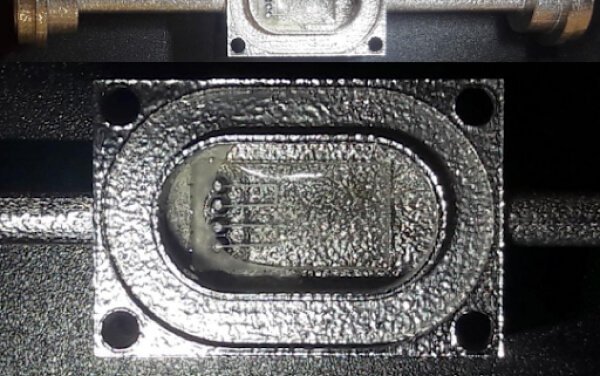
Researchers at CERN have been awarded funding to continue development of 3D printed cooling system components as part of the AHEAD project. The AHEAD project, which consists of CERN and 5 other partners, aims to produce lightweight, smart heat exchangers with a reduced part count by use of AM processes. AHEAD is one of several projects funded under the second phase of the ATTRACT program which is intended to spin-off research technologies into commercial applications. The AHEAD project will build on previous research conducted in phase one of ATTRACT, where a CERN research team had developed smart pipe technology. Smart pipe. (Image credit: CERN) The Smart Wall Pipes and ducts (SWaP) project (pictured above) used 3D printing to manufacture smart pipes with sensors embedded inside the component. The reduction in size and increase in complexity of these parts means they can be placed in tighter spaces, closer to the systems… read more

Alex

Researchers at Stanford University have used 3D printing to develop a novel device that could help boost solar arrays’ energy-capturing capabilities and remove the need for mechanized tracking systems. Shaped like a tipless inverted pyramid, the team’s Axially Graded Index Lens (AGILE) device captures over 90% of the light it’s exposed to and funnels it in a way that trebles its brightness. Compared to existing solar arrays, which follow the sun across the sky, the AGILE can also catch light passively from any angle, lending it the potential to help make solar panels smaller, cheaper, and more efficient. “We wanted to create something that takes in light and concentrates it at the same position, even as the source changes direction,” explains the device’s developer Nina Vaidya. “It’s a completely passive system – it doesn’t need energy to track the source or have any moving parts. Without optical focus that moves… read more
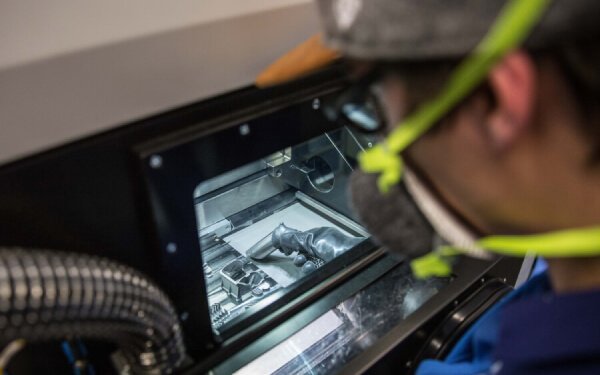
The Airbus A350 already has more 3D printed parts than any other civil airliner. And that list of AM components will grow further shortly thanks to German company Liebherr-Aerospace Lindenberg GmbH, who will be manufacturing a complex titanium component for the aircraft. Liebherr has been selected to supply the lower cargo door actuator and valve for the A350 extra wide body passenger aircraft. It is one of many ongoing projects between Liebherr’s center of competence and Airbus. Liebherr specializes in flight control systems, landing gears, gears, gearboxes and electronics, and is collaborating intensively with Airbus in the development of additive layer manufactured components. Vacuuming the dust (Image credit: Liebherr) Liebherr has hardware installed on all Airbus aircraft and has provided AM components for the A350 before. This is great news for us, because we don’t have any photos of the new 3D printed cargo door actuator, so let’s have a… read more

Researchers from the US and Mexico are looking to better understand the rheological and printability characteristics of nutrient-rich 3D printed foods. While 3D printed food products do make for the occasional playful headline, they also have serious potential to provide target populations with the specific nutrients they need. As such, one of the more promising reasons to advance food additive manufacturing is the prospect of personalized nutrition. However, for individualized nutrition to cover a wide variety of needs based on a balanced diet, printing formulations composed of fruits, vegetables, grains, and perhaps even animal products are needed. Custom food formulations with complex multi-ingredient mixtures have proven difficult to 3D print with extrusion-based methods in the past. This can largely be attributed to a lack of understanding of how food behaves during the printing process, so there’s an ongoing need to delve deeper into the effects of rheology on the printability… read more
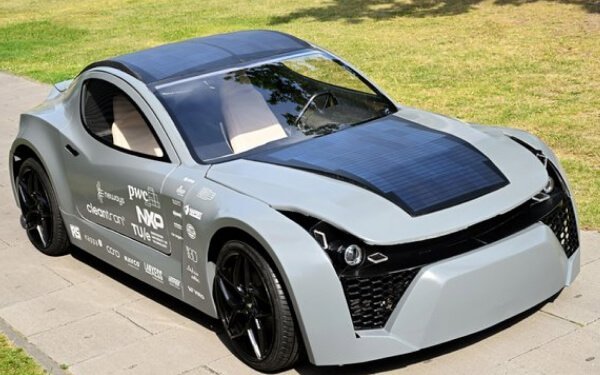
A team of students at TU/Eindhoven have utilized 3D printing to build an electric vehicle that, among other ecologically friendly measures, captures more CO2 than it produces. The passenger-carrying EV is named “Zem” and has been designed and constructed by the student’s TU/ecomotive team at the Dutch university. The team used multiple production methods to ensure that CO2 emissions were kept down during manufacturing, contributing to the overall low carbon philosophy behind the design. The “Zem” with printed monocoque and panels. (Image credit: TU Eindhoven) This included 3D printing the body panels and monocoque structure, which were designed and manufactured in collaboration with CEAD and Royal3D. Both companies are based in the Netherlands and focus on large format polymer additive manufacturing. The printed parts have been made with recycled thermoplastics, which can in turn be shredded and recycled again further downstream after the car’s disposal. Utilizing AM has allowed the… read more
- Popüler oyunların büyüsü Casino dünyasında en çok tercih edilen oyunlar nasıl oynanır
- Unlock the ultimate guide to mastering online casinos Online casinos have revolutionized the way we experience gambling,
- The best moments from local casinos
- Technologie im Casino Die Zukunft des Spielens verstehen
- Unlock the secrets to winning big at any casino Understanding the dynamics of any casino—whether brick-and-mortar or onl


