Researchers from John Hopkins University have developed a new 3D printing programming language called Time Code (T-Code). Outlined in a Nature Communications study, co-authors Sarah Propst and Jochen Mueller claim T-Code improves 3D printing speed and quality for complex multi-material parts. Optimized for Direct Ink Writing (DIW) additive manufacturing, this new approach uses a Python script to divide traditional G-Code into two separate tracks. One controls the 3D print path, while the other manages printhead functions. Unlike G-Code, which executes tasks line-by-line, T-Code uses time to synchronize the 3D printer’s motion with key commands like material switching and flow adjustments. This eliminates common start-stop interruptions that slow production and create defects, enabling continuous, uninterrupted fabrication. As a result, 3D printing becomes faster without losing accuracy or detail, facilitating advanced capabilities like smooth gradients and in-situ material changes. According to the Baltimore-based researchers, their new methodology can handle complex designs that… read more

Our Blog

Czech artist Matyáš Chochola has unveiled a new installation featuring twelve large-scale 3D printed concrete sculptures at the EPO1 Contemporary Art Center in Trutnov, Czech Republic. The installation, titled “The Virtues and Vices of Our Time,” draws inspiration from Matthias Bernard Braun’s 18th-century Baroque cycle while incorporating modern manufacturing techniques. Image Credit: Vojtěch Veškrna Each sculpture stands between 3 to 4 meters tall and weighs approximately one ton. The pieces combine various architectural and artistic styles, including elements from antiquity, cubism, brutalism, and science fiction, creating distinct forms that resemble temple ruins or chess pieces. The production process utilized advanced concrete 3D printing technology with several technical innovations. To achieve complex geometries beyond standard printable angles, the team employed lightweight clay aggregates as supports. The sculptures were printed in multiple segments both horizontally and vertically before assembly, with additional elements including glass, pigments, and bronze incorporated by hand. The twelve… read more

High precision 3D scanner manufacturer 3DMakerpro has introduced the Eagle Series, a handheld 3D scanner designed to make high-precision spatial data capture more accessible. Two models are available, named Eagle and Eagle Max, with the latter incorporating additional cameras to improve scanning efficiency. Built to handle various environments, the 3D scanner combines an extensive range with a user-friendly operation, making it a reliable choice for professionals working on complex projects. Pre-orders for the 3DMakerpro Eagle Series open at 10:00 AM ET on February 11, 2025, through the company’s official website. Eagle Standard carries an MSRP of $3,499, with a limited-time pre-order price of $1,799 for the first 500 buyers. Eagle Max is listed at $4,399, but early buyers can secure it for a pre-order price of $2,299 for the first 500 units. Eagle 3D scanner result. Image via 3DMakerpro. Key features of Eagle 3D scanner According to 3DMakerpro, the Eagle… read more
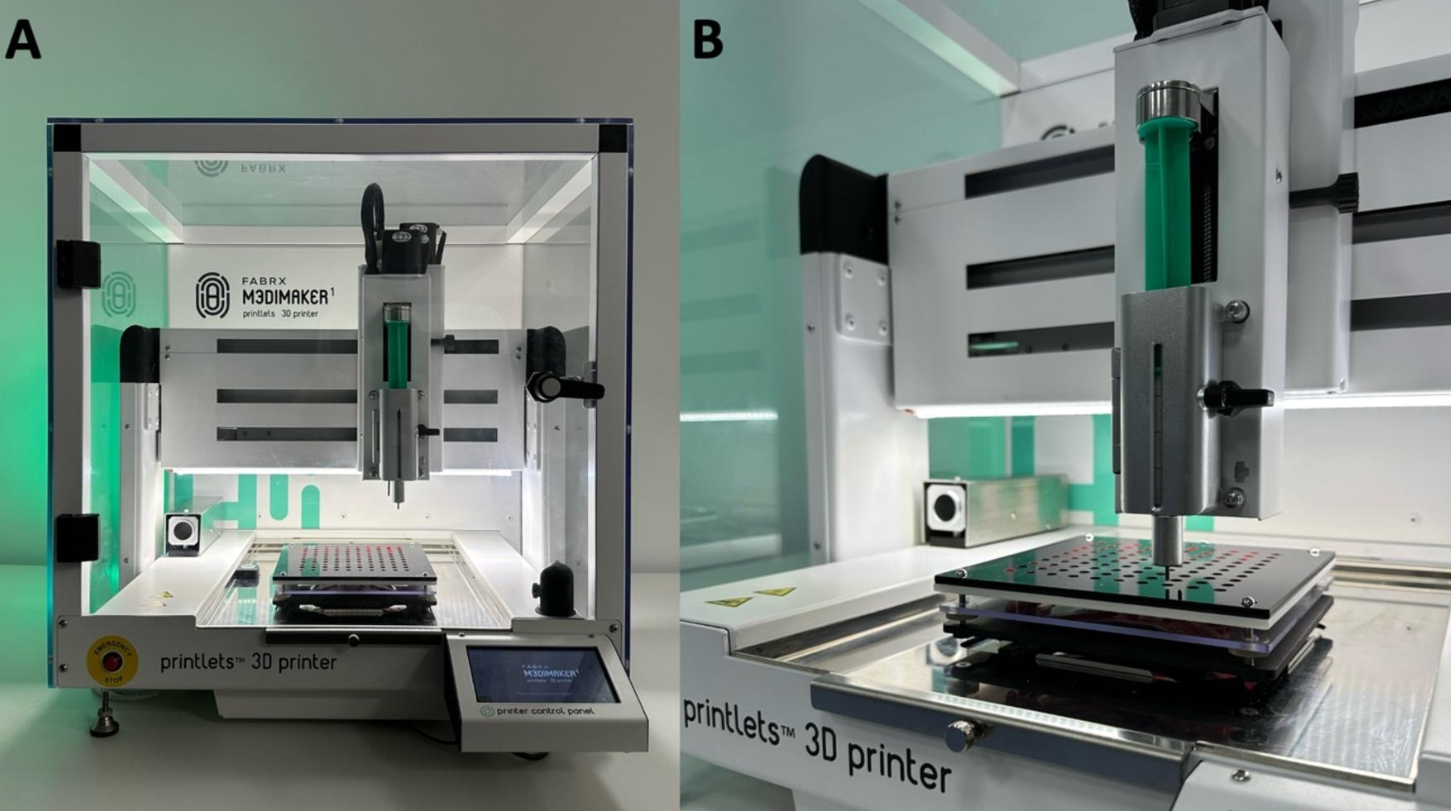
UK-based biotech company FabRx has announced a study exploring how pharmaceutical 3D printing can automate capsule filling in community pharmacies. Published in the International Journal of Pharmaceutics, the research examines the effectiveness of the M3DIMAKER 1 pharmaceutical 3D printer in producing minoxidil capsules, evaluating its cost, time efficiency, and safety compared to traditional manual methods. According to the team, pharmacists often rely on manual compounding, a process that demands time and carries the risk of human error. By using semi-solid extrusion (SSE) technology, the biotech company’s 3D printer simplifies capsule filling, ensuring precise dosing and better consistency. M3DIMAKER 1 pharmaceutical 3D printer with the capsule holder on top of the integrated balance: (A) Full view of the capsule holder- pharmaceutical 3D printer system in a community compounding pharmacy laboratory, (B) Magnified view of the capsule holder within the printer. Image via FabRx. Advanced capsule production with 3D printing One of… read more
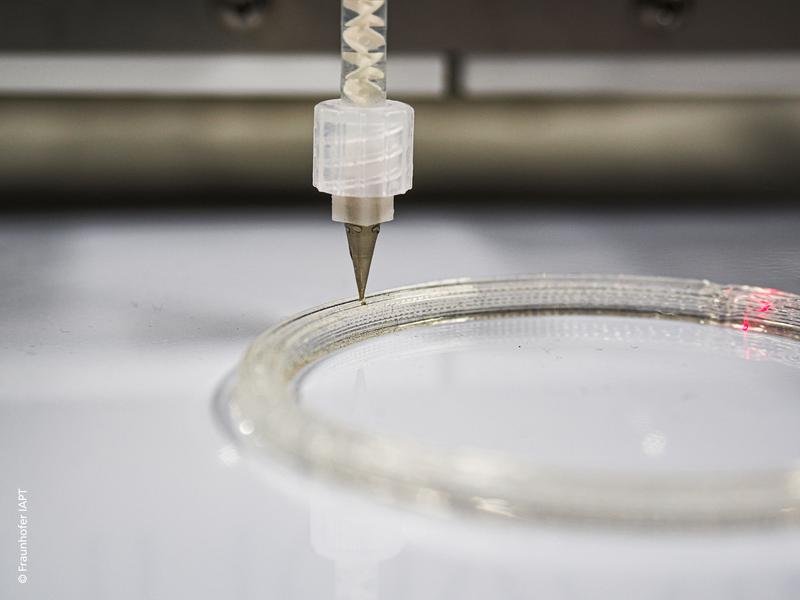
The Fraunhofer Institute for Additive Production Technologies (IAPT) has announced plans to conduct a feasibility study on using additive manufacturing to produce silicone seals. The study will examine whether 3D printed silicone seals can meet industrial standards for mechanical properties and chemical resistance. The research aims to address manufacturing challenges across multiple industries, including mechanical engineering, chemistry, and automotive sectors. While seals are traditionally manufactured using conventional methods, additive manufacturing could potentially offer more flexibility and cost-effectiveness for small batch production and complex geometries. Additive manufacturing of silicone seals (Image Credit: Catharina Clemens Fraunhofer IAPT) The study’s methodology will focus on material testing and technology validation. Fraunhofer IAPT researchers plan to analyze various materials and evaluate surface quality, including roughness and functionality. The investigation will also examine design capabilities and hard-soft material connections. Companies participating in the study through a crowdfunding model can contribute their specific questions and requirements. This… read more
- Popüler oyunların büyüsü Casino dünyasında en çok tercih edilen oyunlar nasıl oynanır
- Unlock the ultimate guide to mastering online casinos Online casinos have revolutionized the way we experience gambling,
- The best moments from local casinos
- Technologie im Casino Die Zukunft des Spielens verstehen
- Unlock the secrets to winning big at any casino Understanding the dynamics of any casino—whether brick-and-mortar or onl