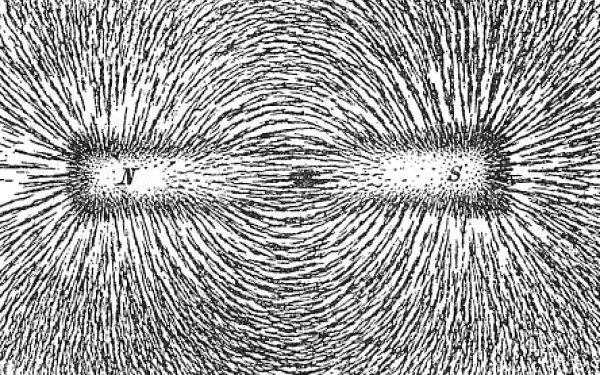
A new paper published by researchers from Thailand has summarized various options for 3D printing magnets. The paper gathers together different methods and processes for the 3D printing of magnets including Stereolithography, binder jetting, selective laser melting, electron beam melting, extrusion free-forming, and FDM. Let’s have a look at what your options are should you ever find yourself in need of a printed magnet. But first, let’s look at why you would 3D print one in the first place. Traditional Magnets The paper is titled “Recent Developments in 3D Printing of Rare-Earth-Free Permanent Magnets” so it is concerned with magnets that are always “on”, rather than electromagnets and softer ferromagnets, the latter of which can lose magnetism over time. Magnets from common elements such as iron, cobalt or nickel or other alloys, are examined in the paper, and rare Earth materials such as neodymium and samarium are ignored. Rare Earth… read more

Our Blog

Researchers at the Hebrew University of Jerusalem have developed a novel wood-based 3D printing material that can morph into pre-designed shapes. Made from a mixture of wood flour and plant extracts, the eco-friendly feedstock is able to shapeshift due to the fiber orientations in its wood content, which cause it to warp as it dries. While the team developed their material a few years ago, they recently discovered that by controlling the way it’s laid down, they could time how its moisture content evaporates, in a way that allows it to form complex objects. Thus far, the scientists have 3D printed their wood-infused ink into saddle, dome and helix-shaped models, but with further development, they say it could be used to create more intricate self-assembling objects such as household furniture. Wood’s unique morphing potential In the natural world, it’s well known that certain species of plant and animal life can… read more
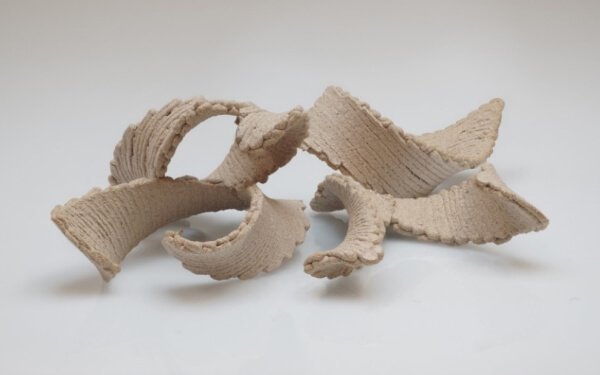
Researchers from the Hebrew University of Jerusalem have created a technique that allows them to print 3D wooden structures that change shape as they dry. It is fascinating to watch the prints curl and bend and may be a way to manufacture furniture in the future! 3D printed wood warped seed pods. (Image credit: Wood Warping Composite by 3D Printing) The group lead by Doran Kam, a Ph.D. student working under Dr. Shlomo Magdassi at the university, has found a way to turn wood shavings into a printable ink that warps as it dries. It is done in such a way that they can control how it bends and twists by adjusting the speed of the print and the orientation the part is printed at. It’s a process the wood naturally exhibits, and the researchers took advantage of it for their new printing technique. Watch flat 3D-printed wood twist into… read more
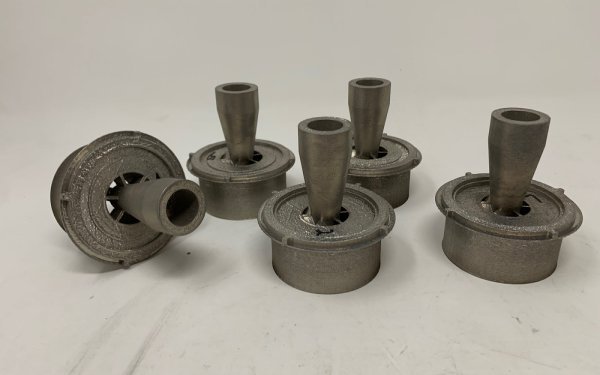
Purdue has recently partnered with VELO3D to 3D print a fuel injector that can replicate hypersonic conditions in their lab. This is a large step forward for hypersonic research and will allow the group to iterate hypersonic designs faster than ever before. Purdue has been leader in hypersonic research space for awhile and recently invested heavily ($18 million dollars to be exact) to establish The University’s Hypersonics Advanced Manufacturing Technology Center (HAMTC) with the help of Lockheed Martin, GE Additive, Dynetics, Aerojet Rocketdyne, GE Edison Works, Boeing and others on the technology to get the facility off the ground. Associate Professor Carson Slabaugh at Purdue’s HAMTC (Image credit: Purdue University) Over the few months since the initial funding, it sounds like the facility has made massive strides. However, they were still hampered by a large issue; testing parts at an above Mach 5 level. They found this region hard to… read more
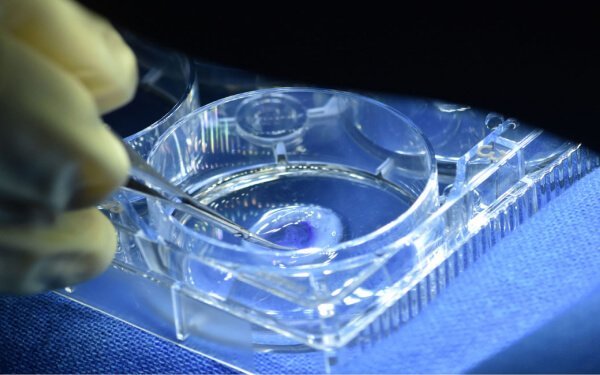
Researchers from Hyderabad in India have successfully transplanted a 3D printed cornea onto a rabbit, which will pave the way for transplants onto human patients. Read on to learn more about this world first. The researchers from Indian Institute of Technology (IIT) ,LV Prasad Eye Institute (LVPEI), and the Center for Cellular and Molecular Biology (CCMB), all located in Hyderabad, produced the cornea using natural, animal-free components. It was printed with a biomimetic ink made from human donor tissue. The researchers decellularized a human cornea tissue matrix and added some stem cells. The old cornea has lived on as the basis of a new cornea and may contribute towards treating scratched/damaged corneas, which can lead to blindness. The cornea in question (Image credit: LVPEI) “It is the first 3D printed human cornea that is optically and physically suitable for transplantation,” read a statement from researchers at LVPEI. “The bio-ink used… read more
- Popüler oyunların büyüsü Casino dünyasında en çok tercih edilen oyunlar nasıl oynanır
- Unlock the ultimate guide to mastering online casinos Online casinos have revolutionized the way we experience gambling,
- The best moments from local casinos
- Technologie im Casino Die Zukunft des Spielens verstehen
- Unlock the secrets to winning big at any casino Understanding the dynamics of any casino—whether brick-and-mortar or onl