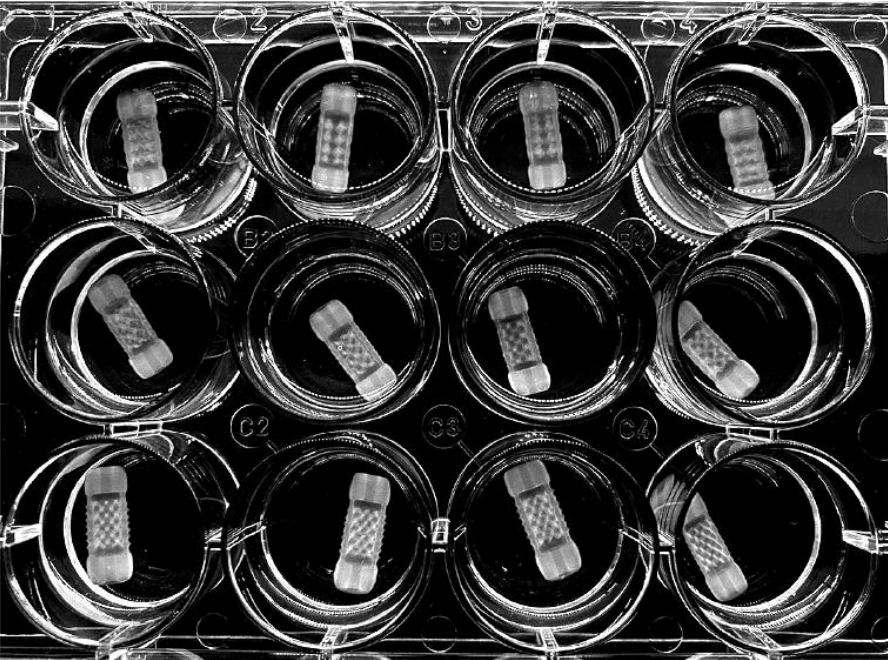
A research team from Utrecht University has successfully fabricated working livers using a newly developed ultrafast volumetric 3D bioprinting method. By means of visible light tomography, the volumetric bioprinting method enabled the successful printing of miniature stem cell units by making the cells “transparent”, which meant they retained their resolution and ability to perform biological processes. Printed in less than 20 seconds, the liver units were able to perform key toxin elimination processes mimicking those that natural livers perform in our bodies, and could open new opportunities for regenerative medicine and personalized drug testing. Volumetric bioprinting of liver-like metabolic biofactories. Image via Advanced Materials. Ultrafast volumetric 3D bioprinting The Utrecht team first demonstrated their volumetric bioprinting technique in 2019 with the creation of free-form tissue structures. The method differs from current bioprinting processes which are based on layer-by-layer deposition and assembly of repetitive building blocks, such as cell-laden hydrogels and… read more

3D Printing Research

3D Printing Industry is currently seeking feedback on resin 3D printing. Send your insights now and take the Spotlight on Resin 3D Printing Survey. Researchers at ETH Zurich have successfully 3D printed artificially colored nanostructures, drawing inspiration from the wings of a butterfly. Native to tropical Africa, the wings of the Cynandra opis species are characterized by their vibrant colors. Rather than being pigment-based, however, these colors are structural, meaning they’re produced by intricate nanostructures on the surface of the wings. By deflecting and refracting visible light, the wings of the Cynandra opis amplify certain color components, resulting in a gemstone-esque shine. The research group led by Andrew deMello, Professor of Biochemical Engineering, has successfully managed to recreate these naturally-occurring structures using a custom nanoprinting technique. Xiaobao Cao, lead author of the study, explains, “The regular nanostructures on the wings of Cynandra opis were particularly well suited to reconstruction using… read more
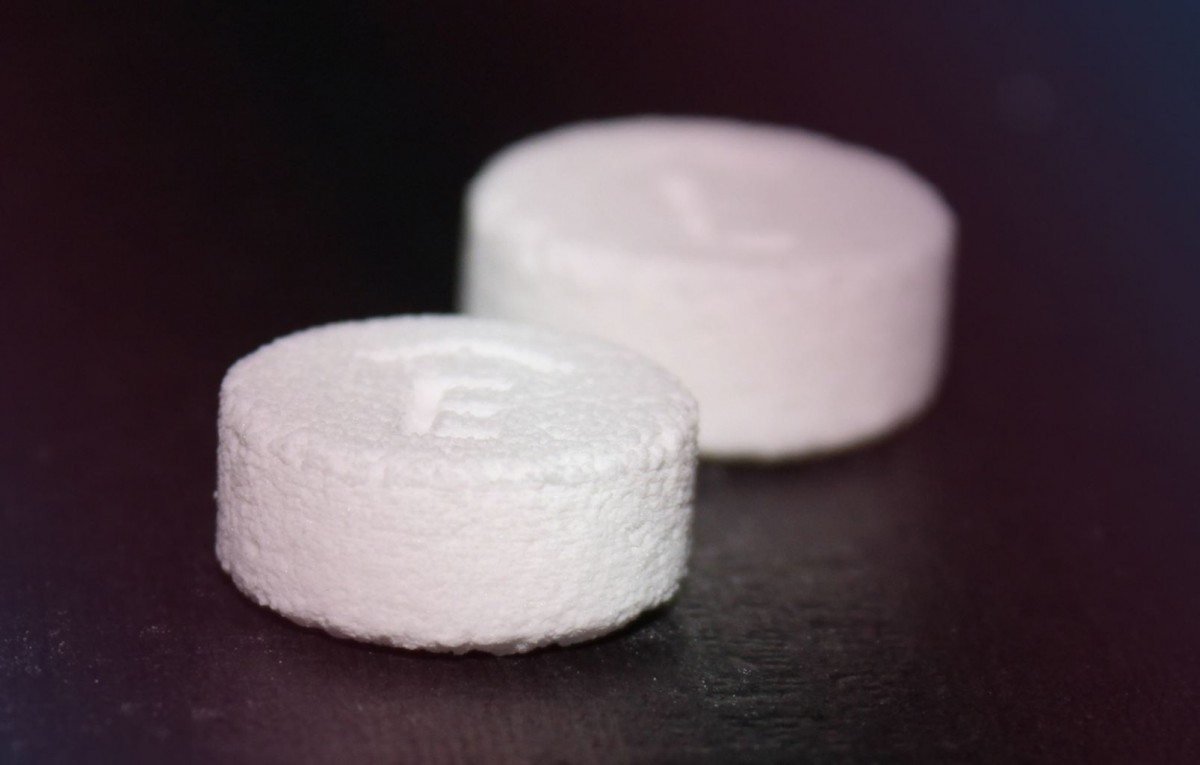
Researchers at the University of Queensland (UG) have published a new paper exploring 3D printing’s role in the future of personalized medicine for patients. According to pharmacist, UQ PhD student and lead author of the study Liam Krueger, the technology is refined enough to accurately print specialized dosages onsite in hospitals and pharmacies in coming years. Through the study, the researchers are hoping to accelerate the advancement of 3D printed pharmaceuticals within Australia and beyond. “3D printing is regularly used in other medical settings such as dentistry to create implants, however the utilization of the technology is lagging in the pharmaceutical space,” said Krueger. “With this research we are hoping to gain more momentum for the implementation of this technology which would be an incredible opportunity for the future of the Australian pharmaceutical landscape.” Spritam, the world’s first FDA-approved 3D printed drug. Photo via Aprecia 3D printing’s pharmaceutical progess While… read more

3D Printing Industry is currently seeking feedback on resin 3D printing. Send your insights now and take the Spotlight on Resin 3D Printing Survey. Researchers from RWTH Aachen University’s Chair for Digital Additive Production (DAP) have started using Extreme High-Speed Laser Material Deposition (EHLA) 3D printing technology to develop new alloys for laser powder bed fusion (PBF). Originally developed in 2017, EHLA is Fraunhofer ILT’s take on high-volume directed energy deposition, or DED. The additive manufacturing technology was intended as a method for coating and repairing metal parts, and has the potential to replace current corrosion and wear protection methods such as hard chrome plating and thermal spraying. The RWTH investigation involved comparing the two printing technologies’ process characteristics, which yielded promising results with regards to the transferability of their material capabilities. In essence, the DAP team believes it can qualify EHLA as a rapid alloy development platform for PBF… read more

Insiders and analysts predict the 3D printing trends to watch in our latest series of articles focused on the future of 3D printing. Researchers at the IMDEA Nanoscience Institute, an interdisciplinary research center in Spain, have developed a new method of 3D printing magnets using recycled materials. The work was conducted as an answer to the supply chain issues caused by the COVID-19 pandemic, which left the manufacturing sector short on many materials, including those required to make magnets. To address the problem, Daniel Casaleiz and his colleagues looked into alternative ways of sourcing magnetic materials, showcasing their work at the 2022 Joint Magnetism and Magnetic Materials (MMM) Intermag conference in January. A magnet 3D printed using recycled ferrite waste. Photo via IMDEA Nanoscience Institute. Recycling ferrite residues Though the average person may not realize it, magnetic devices are integral to many different parts of our lives. Magnets are used… read more
- How technology reshapes the landscape of gambling today
- Mastering the Casino Experience An Advanced Guide to lucky lace slot Success
- Aprende estrategias básicas para principiantes en el casino con Fortune Tiger
- Les jeux de casino incontournables à découvrir absolument
- The Future of Casinos What to Expect from New Technologies at Zet Casino


