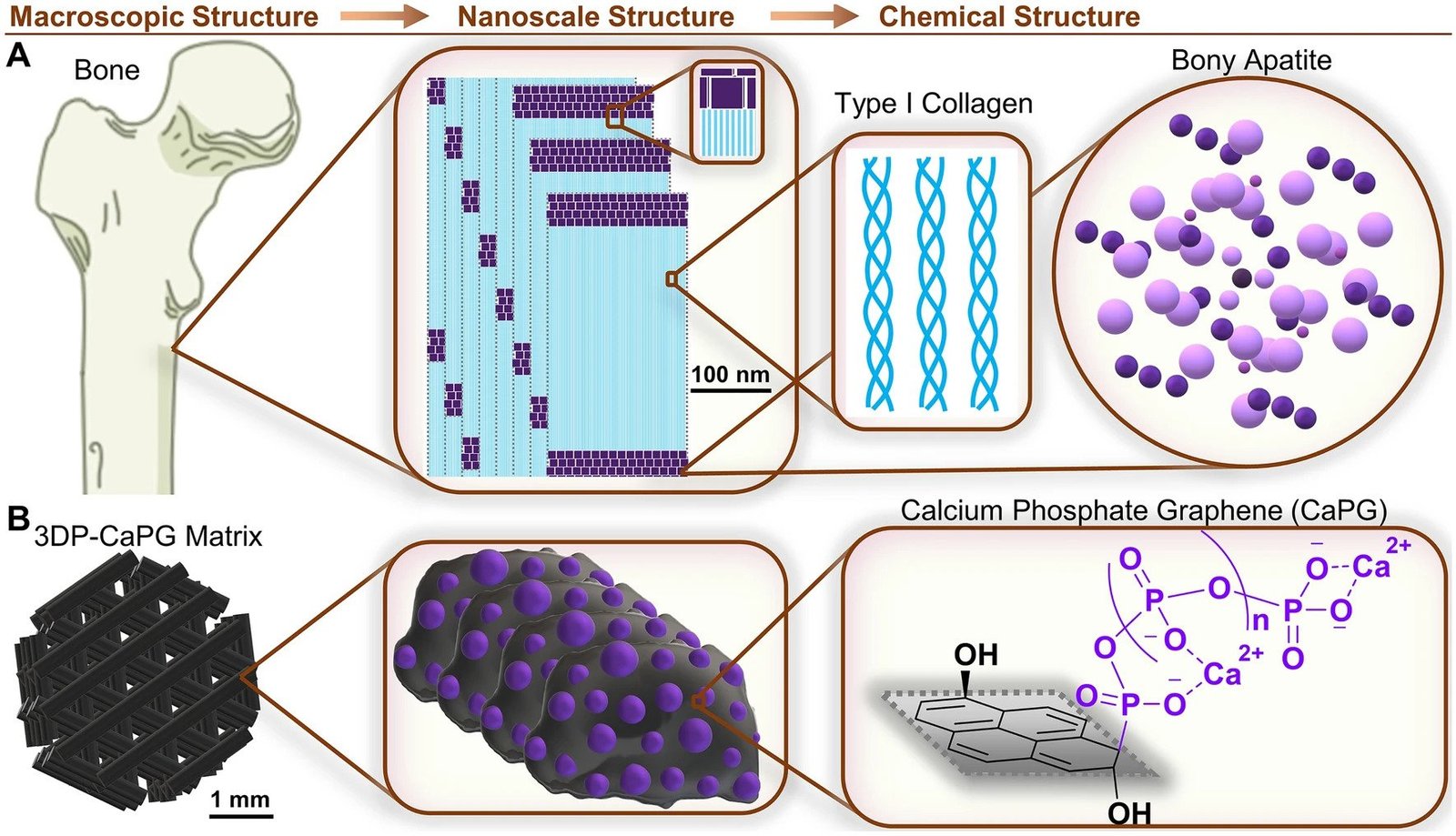
A team of researchers from Carnegie Mellon University (CMU) and the University of Connecticut (UConn) has 3D printed novel calcium phosphate graphene (CaPG) scaffolds that could be used for bone regeneration applications in the future. The team sought to develop an alternative to traditional autogenous bone grafts that simply stabilize bone defects and injuries. The study saw the successful fabrication of a 3D bioprinted alternative that supports tissue regeneration at the defect site, and which possesses numerous desirable properties such as osteoinductivity, biological safety, a long shelf-life, and reasonable production costs. Biomimetic 3D printed CaPG matrix design. Image via Nature. Challenges of 3D printing graphene While graphene’s lightweight properties, electrical and thermal conductivity, and mechanical strength make it a desirable material for applications within biomedicine, energy generation, and microelectronics, much of graphene’s potential comes from deploying the material in its monolayer form. This therefore presents a significant challenge when trying… read more

3D Printing Research
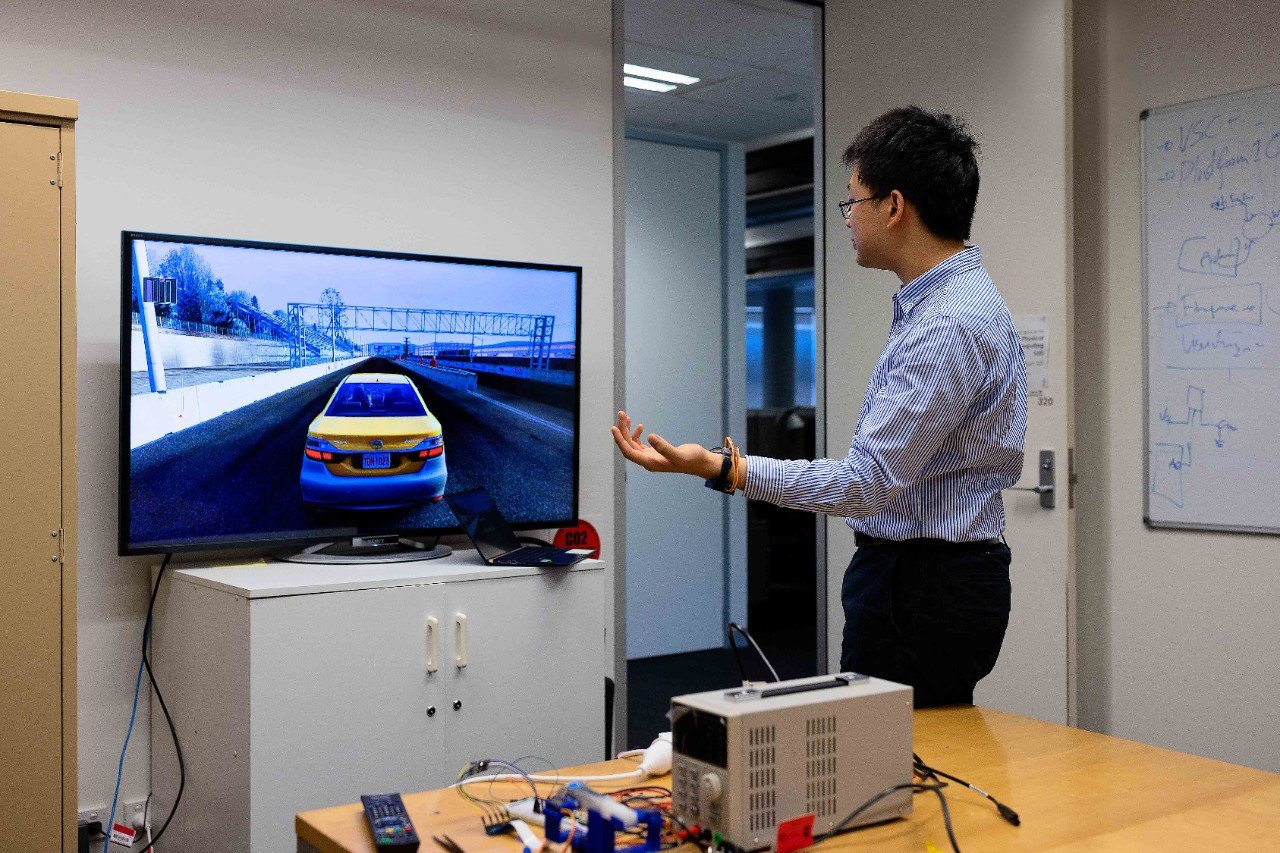
Researchers at the University of Sydney have developed a 3D printed sensor bracelet that allows those with hand impairments to more easily use computers and play video games. By detecting vibrations in users’ wrists as they move their fingers, the wearable is said to be capable of picking up inputs, before relaying these to a machine learning (ML) program that converts them into computational commands. Once they’ve perfected this process, the team intends to make the bracelet open-source, with the aim of improving smart device access for disabled people across the world. “Accessibility shouldn’t come at a huge cost,” explains Stephen Lin, the undergraduate honours student who led the project. “Our mission is to provide an affordable, easy-to-use solution to assist people around the world who are living with disability. We want this technology to be available to anyone who needs it, which is why we plan to release it… read more
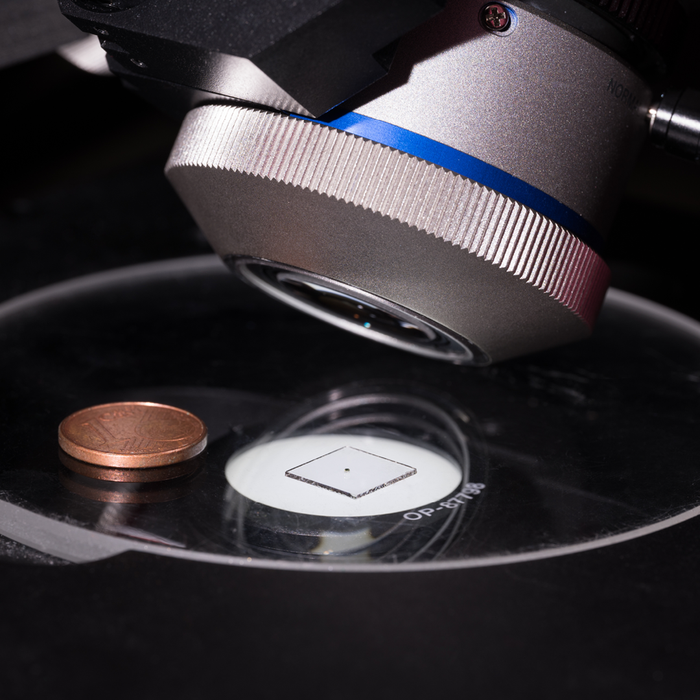
Researchers from the University of Stuttgart have developed a new, reliable method of coating 3D printed lenses with anti-reflective coatings. Dubbed low-temperature thermal atomic layer deposition (ALD), the approach is capable of coating multi-lens systems as small as 600 microns in diameter, and helps to minimize the light lost due to reflections between lens interfaces. According to the team, the innovation will have major implications for the 3D printing of high-performance optical systems that rely on multiple microlenses. “Our new method will benefit any 3D printed complex optical system that uses multiple lenses,” said Harald Giessen, lead author of the study. “However, it is especially useful for applications such as miniature fiber endoscopes, which require high-quality optics and are used for imaging under less-than-ideal lighting conditions.” A 3D printed microlens with and without the anti-reflective coating. Image via University of Stuttgart. The need to eliminate reflections Within optical systems, a… read more
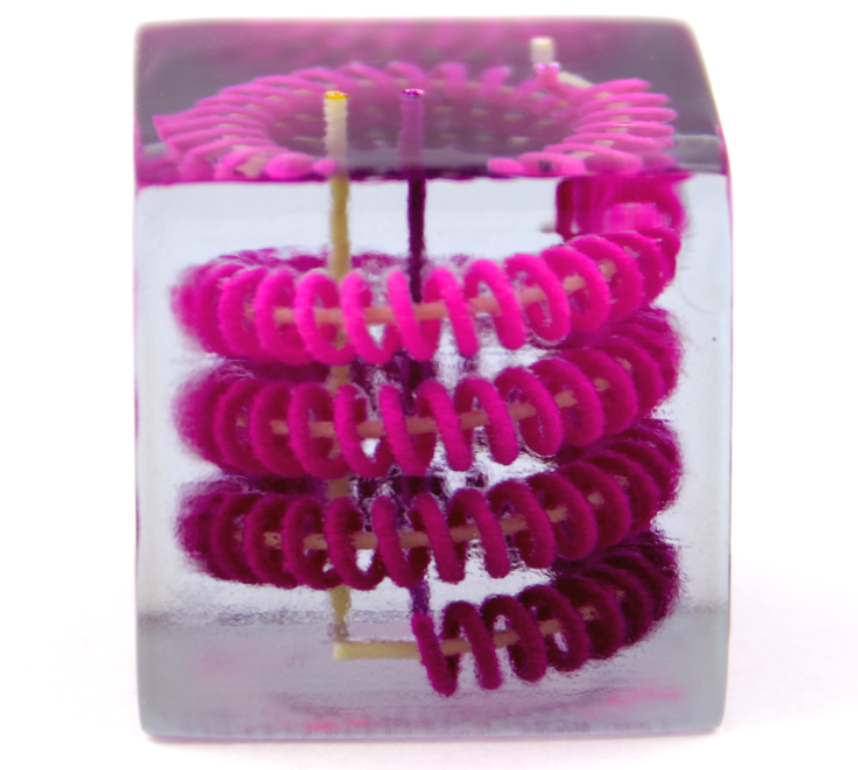
Researchers from the University of Colorado Boulder have developed a new method of multi-material 3D printing that’s capable of producing parts with both solid and liquid components. Virtually all of today’s 3D printers, bar maybe a few experimental devices, 3D print exclusively solid objects. This is great for everything from desk toys and gears to engine parts and electronics casings, but the ability to integrate liquid sections into a build could vastly expand the number of potential applications. For example, a solid-liquid printer could fabricate entire wearable electronics with solid structural parts and integrated liquid wires, as well as lifelike medical models that more accurately mimic the look and feel of human organs. Taking it a step further, such a machine might even be able to produce an entire print-in-place robot with a single print run, eliminating the need for any assembly. Robert MacCurdy, senior author of the study, said,… read more
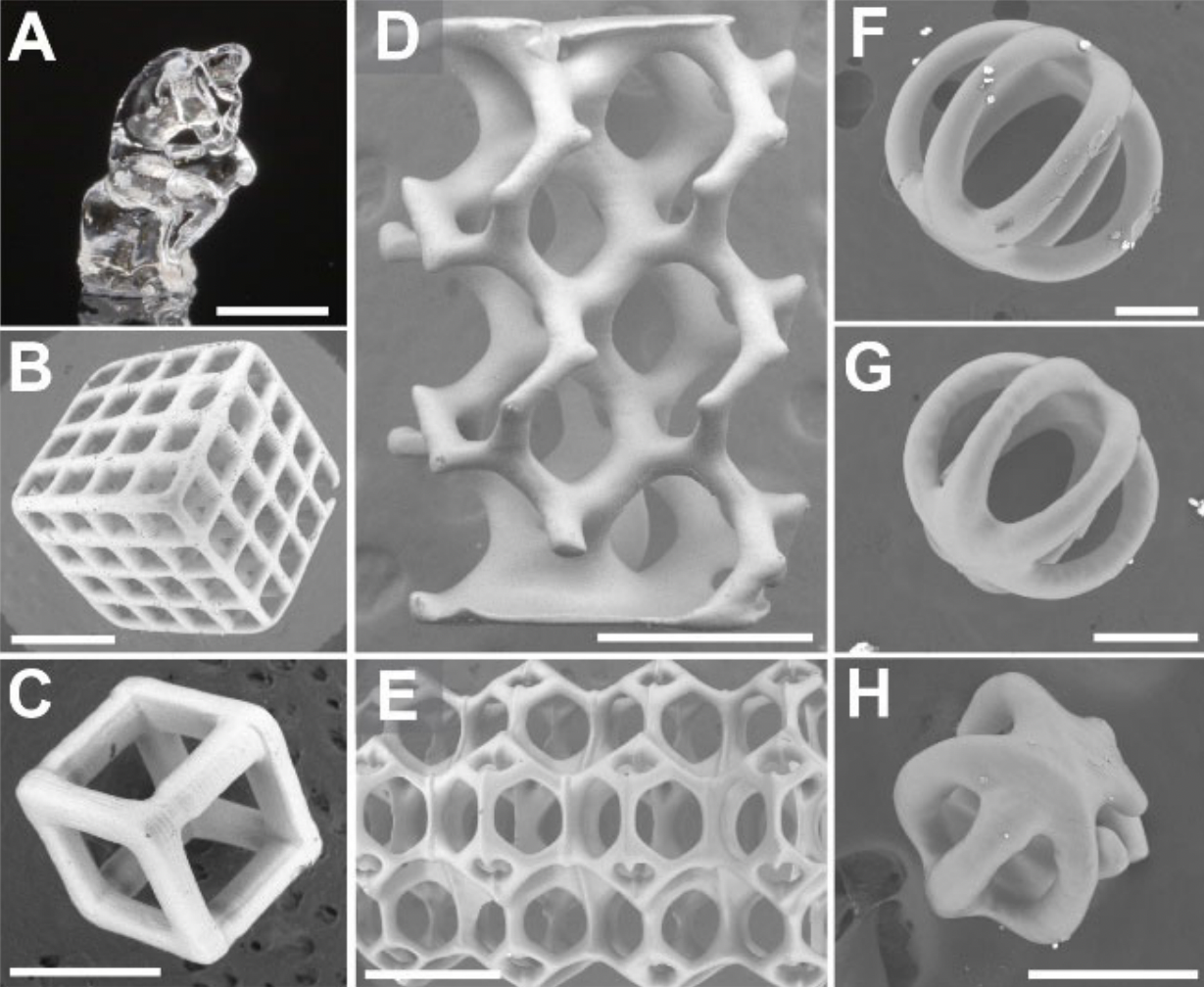
Researchers at the University of Freiburg have worked with colleagues at the University of California, Berkeley to come up with a novel means of rapidly 3D printing complex glass parts at a microscopic scale. Known as ‘ Microscale Computed Axial Lithography’ (Micro-CAL), this approach involves exposing resin to 2D light images of a desired shape from multiple angles, which when they overlap, trigger polymerization. When used to print the Glassomer material previously honed at Freiburg, the team say their layer-free process has the potential to unlock devices with new microfluidic or micro-optical functionality. “For the first time, we were able to print glass with structures in the range of 50 micrometers in just a few minutes, which corresponds roughly to the thickness of a hair,” explains the University of Freiburg’s Dr. Frederik Kotz-Helmer. The ability to manufacture such components at high speed and with great geometric freedom will enable new… read more
- How technology reshapes the landscape of gambling today
- Mastering the Casino Experience An Advanced Guide to lucky lace slot Success
- Aprende estrategias básicas para principiantes en el casino con Fortune Tiger
- Les jeux de casino incontournables à découvrir absolument
- The Future of Casinos What to Expect from New Technologies at Zet Casino


